
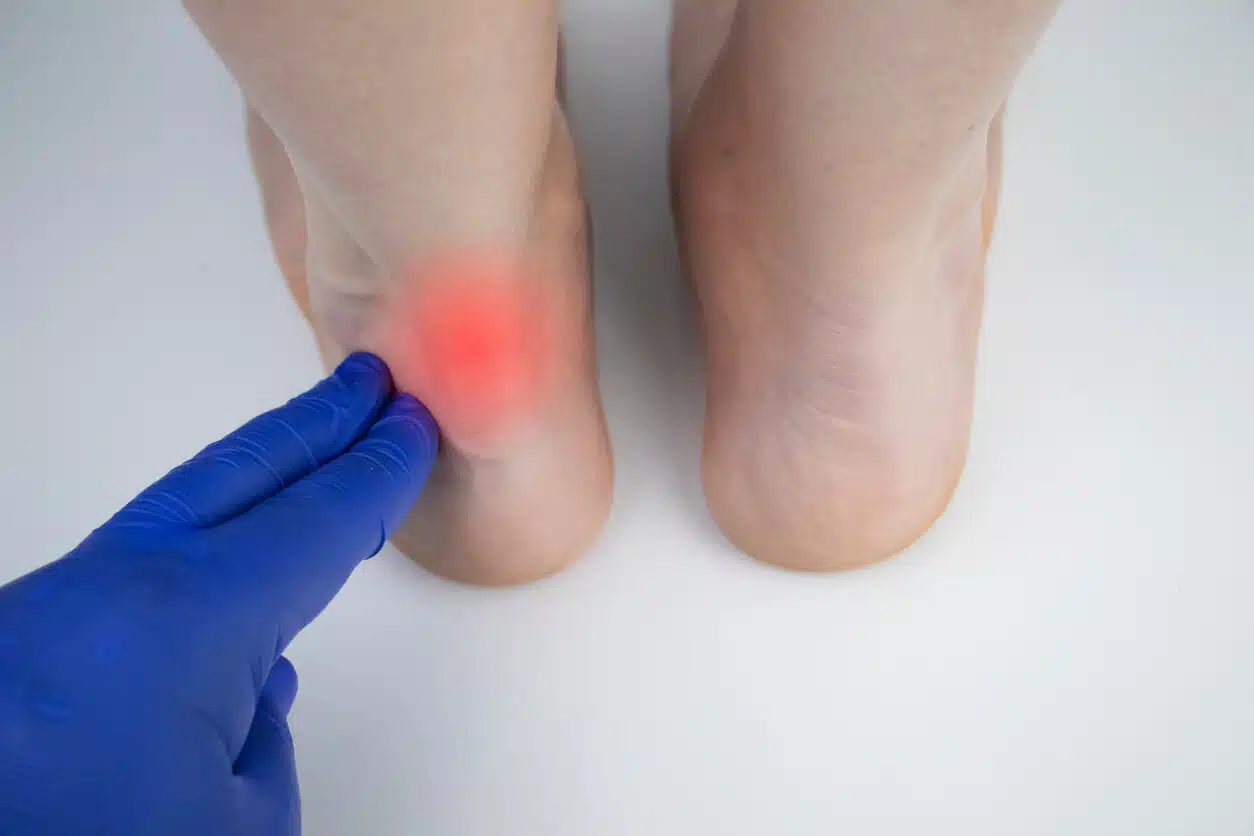
Recovery from Achilles tendonitis depends on how severe the injury is — mild cases can resolve in a few weeks, while chronic or neglected cases may take three to six months or longer. Early treatment, a structured rehabilitation plan, and professional guidance are the most important factors in shortening recovery time.
- Severity determines your timeline. Mild Achilles tendonitis may heal in two to six weeks, while chronic cases can take three to six months or more with consistent treatment.
- Rest alone is not enough. Targeted strengthening exercises and physical therapy are essential components of treating Achilles tendonitis effectively and preventing recurrence.
- Professional care speeds recovery. A podiatrist can identify underlying biomechanical issues that increase re-injury risk and develop a personalized plan to keep you moving.
Treating Achilles tendonitis starts with understanding what you are actually dealing with — and how long recovery realistically takes. The Achilles tendon is the largest and strongest tendon in the body. It connects the calf muscles to the heel bone and absorbs enormous force with every step.
When it becomes inflamed from overuse, sudden increases in activity, or poor biomechanics, the result is sharp or aching pain at the back of the heel that can sideline even the most active individuals.
Many people assume this injury heals quickly with rest. The reality is more nuanced. Recovery timelines vary significantly based on severity, treatment choices, and how consistently a patient follows through with rehabilitation. Skipping steps or returning to activity too soon is one of the most common reasons this condition lingers for months — or keeps coming back.
This blog breaks down what you can expect at each stage of recovery, what the research says, and how The Podiatry Group of South Texas helps patients in San Antonio and surrounding areas get back on their feet faster.
What Is Achilles Tendonitis and Who Gets It?
Achilles tendonitis occurs when the Achilles tendon becomes irritated and inflamed, typically from repetitive stress rather than a single traumatic event. It is one of the most common overuse injuries among runners, but it also affects people who:
- Increase physical activity suddenly
- Wear unsupportive footwear
- Have tight calf muscles
Two forms of the condition exist:
- Noninsertional Achilles tendonitis – Involves the middle portion of the tendon, most common in younger, more active individuals
- Insertional Achilles tendonitis – Affects the lower area where the tendon attaches to the heel bone, more common in people of all activity levels, including those who are less active
Both types require structured treatment. Left untreated, either form can progress to tendon degeneration, which is significantly harder to reverse.
How Long Does Recovery from Achilles Tendonitis Actually Take?
Treatment and recovery for Achilles tendonitis depend entirely on how the injury is classified.
Mild Cases: Two to Six Weeks
Mild Achilles tendonitis, involving only minor irritation and no structural changes to the tendon, typically improves within two to six weeks. This timeline assumes a patient reduces activity, applies ice, and follows a basic stretching routine consistently.
Mild cases that receive early, appropriate treatment often resolve within this window. Delay in treatment, even by a few days, can shift a mild case into a moderate one.
Moderate Cases: Six to Twelve Weeks
When the tendon has developed more significant inflammation or some structural thickening, treating Achilles tendonitis effectively typically takes six to twelve weeks. Physical therapy, eccentric strengthening exercises, and in some cases custom orthotics are necessary at this stage.
It is important to note that patients see meaningful improvement within three months when they follow a structured, conservative treatment program.
Chronic Cases: Three to Six Months or Longer
Chronic Achilles tendonitis, where inflammation has been present for months and the tendon has undergone degenerative changes, can require three to six months or more of dedicated treatment. Some patients with long-standing cases may need additional interventions, such as corticosteroid injections or platelet-rich plasma (PRP) therapy, to achieve lasting relief.
What Does Recovery Actually Involve?
Many patients expect that treating Achilles tendonitis means resting and waiting. But rest is only one part of a comprehensive plan. Here is what the recovery process typically includes.
Phase 1: Acute Management (Weeks One to Two)
The first priority is reducing inflammation and protecting the tendon from further stress.
- Relative rest — stopping the activity that caused the injury, not complete immobilization in most cases
- Ice application for 15 to 20 minutes several times daily
- Nonsteroidal anti-inflammatory drugs (NSAIDs), such as ibuprofen (Advil, Motrin), as recommended by a physician
- Heel lifts or supportive footwear to reduce tendon strain
At this stage, your podiatrist may also evaluate your gait and foot structure to identify mechanical contributors.
Phase 2: Rehabilitation and Strengthening (Weeks Two to Eight)
This phase is where most recovery happens — and where many patients make the mistake of stopping treatment too early.
A study published by the National Institutes of Health found that eccentric strengthening exercises significantly reduce recurrence rates in patients with Achilles tendinopathy. These exercises involve slowly lowering the heel below step level while bearing weight, which stimulates tendon repair and builds resilience.
Other evidence-based treatments at this stage may include:
- Physical therapy – Guided stretching and progressive loading tailored to the patient
- Custom orthotics – Address overpronation, leg length discrepancies, or high arches that increase tendon load
- Soft tissue therapies – Such as massage or instrument-assisted mobilization to reduce adhesions and improve tendon mobility
Phase 3: Return to Activity (Weeks Six to Twelve and Beyond)
Returning to normal activity too quickly is the single most common cause of setback. A safe return-to-activity plan increases intensity by no more than 10% per week and monitors for pain or stiffness lasting more than 24 hours after exercise.
For athletes, this phase may involve low-impact cross-training — such as cycling or swimming — before gradually reintroducing running or sport-specific movements.
What Slows Recovery from Achilles Tendonitis?
Several factors extend the timeline for treating Achilles tendonitis. Knowing them helps patients avoid common mistakes.
- Returning to activity before the tendon has fully healed: Pain reduction does not equal structural healing. The tendon may still be recovering long after symptoms ease.
- Skipping rehabilitation exercises: Strength and flexibility deficits leave the tendon vulnerable.
- Ignoring biomechanical issues: Tight calves, flat feet, or leg length discrepancies continue loading the tendon abnormally without correction.
- Wearing worn-out or unsupportive footwear: Athletic shoes lose meaningful cushioning and support after 300 to 500 miles of use.
- Excess body weight: Research cited in published literature suggests each pound of body weight creates roughly four pounds of pressure on the feet and ankles during weight-bearing activities.
When Should You See a Podiatrist for Achilles Tendonitis?
Some patients attempt to self-manage Achilles tendonitis for weeks before seeking professional care. However, early evaluation leads to better outcomes. You should schedule an appointment if you notice:
- Heel or tendon pain that persists beyond a few days of rest
- Morning stiffness in the back of the heel that improves with gentle movement
- Pain or discomfort during weight-bearing activities such as walking, running, or jumping
If you experience any of these symptoms, it is important to see a podiatrist for a proper diagnosis and treatment plan.
Treating Achilles Tendonitis in South Texas
At The Podiatry Group of South Texas, we specialize in diagnosing and treating Achilles tendonitis. Our team of experienced podiatrists understands the impact that this condition can have on your daily life, and we are committed to providing personalized care to help you get back on your feet.
To learn more or make an appointment with one of our podiatrists, contact us today at (210) 227-8700 or fill out our online appointment request form.
