
In short,
- Morton’s neuroma causes pain and numbness in the foot, often between the toes.
- Symptoms include feeling like a pebble is in your shoe and pain that worsens with activity.
- Early diagnosis and treatment, including conservative measures and potential injections, can improve outcomes.
Morton’s neuroma is a painful condition affecting the foot, specifically the nerves between the toes. This condition, often developing between the third and fourth toes, can cause sharp, burning pain, numbness, or a tingling sensation.
Recognizing the signs and symptoms of Morton’s neuroma is crucial for early diagnosis and effective management.
What is Morton’s Neuroma?
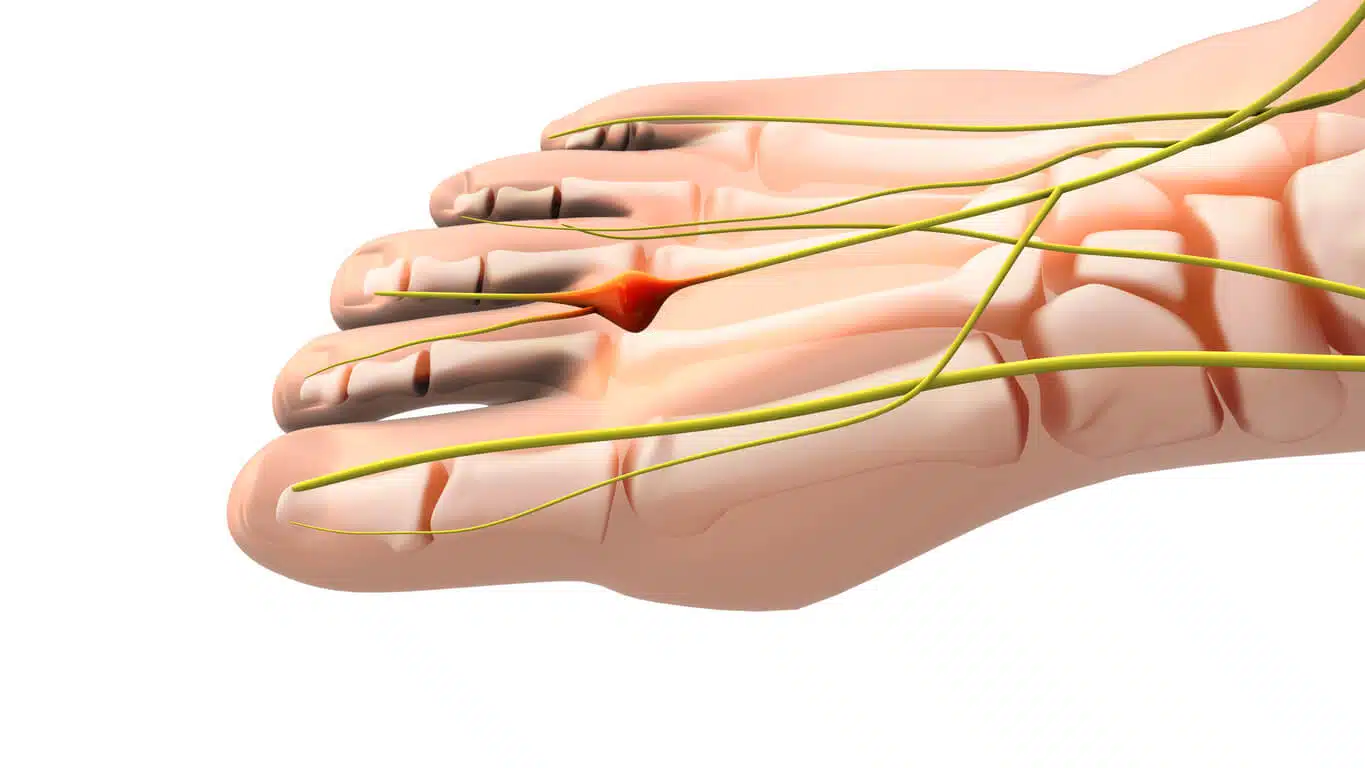
Morton’s neuroma involves a thickening of the tissue around one of the nerves leading to your toes. This thickening, or benign growth, can compress the nerve, leading to pain and discomfort. While not technically a tumor, the term “neuroma” describes this nerve enlargement.
The condition is named after Dr. Thomas George Morton, who first described it in the late 19th century. It’s more common in women than men and typically affects people between the ages of 40 and 60.
Causes and Risk Factors
Several factors can contribute to Morton’s neuroma. These include:
- Footwear:High-heeled or tight shoes that squeeze the toes.
- Foot Deformities:Conditions like bunions or hammertoes which can change how your foot works.
- High-impact Activities:Running or sports that put repeated pressure on the forefoot.
- Repetitive Activities:Activities that involve repetitive bending of the foot.
Knowing these risk factors can help you take steps to prevent the condition.
Recognizing the Symptoms of Morton’s Neuroma
Symptoms of Morton’s neuroma can vary, but some common signs include:
- Burning pain in the ball of the foot that may spread into the toes.
- A feeling like you’re walking on a pebble or a bunched-up sock.
- Numbness or tingling in the toes.
- Pain that gets worse with activity or tight shoes.
The pain may come and go, and you might feel better when you take off your shoes and massage your foot. If you have these symptoms, talk to your doctor.
Keep in mind that these symptoms can sometimes be similar to other foot problems, such as plantar fasciitis, so it’s important to get the right diagnosis.
Morton’s Neuroma vs. Plantar Fasciitis: Key Differences
Both Morton’s neuroma and plantar fasciitis cause foot pain, but they affect different areas and feel different.
- Location of Pain:Morton’s neuroma usually hurts in the ball of the foot and toes. Plantar fasciitis hurts in the heel and arch.
- Type of Pain:Morton’s neuroma pain is often burning or sharp, sometimes with numbness or tingling. Plantar fasciitis pain is typically a stabbing pain that’s worse in the morning.
- Aggravating Factors:Morton’s neuroma pain often gets worse with tight shoes, while plantar fasciitis pain often gets worse with standing or walking for a long time.
Knowing the difference between these conditions is important for getting the right treatment.
Diagnosing Morton’s Neuroma
A physical exam by a doctor is usually the first step in diagnosing Morton’s neuroma. The doctor will move your foot to see if it can cause the symptoms. They might also feel the space between your toes to check for a lump or tenderness.
Imaging tests, such as X-rays or MRI, may be used to rule out other problems like stress fractures or arthritis. X-rays won’t show Morton’s neuroma, but they can help rule out other causes of foot pain. MRI can show the soft tissues and nerves, which can help confirm the diagnosis.
Treatment Options for Morton’s Neuroma
Treatment for Morton’s neuroma focuses on relieving pain and improving how your foot works. The first steps often involve simple things you can do yourself, such as
- Changing Footwear:Wearing shoes with a wide toe box and avoiding high heels.
- Orthotics:Using arch supports to reduce pressure on the nerve. You can buy these at the store or have them custom-made.
- Rest:Avoiding activities that make the condition worse.
- Ice:Applying ice packs to the painful area to reduce swelling.
If these steps don’t help, other treatment options may include:
- Injections:Corticosteroid injections to reduce swelling and pain.
- Nerve Blocks:Injections of numbing medicine to block pain signals.
- Surgery:In some cases, surgery to remove the affected nerve may be considered.
Talk to your doctor to decide on the best treatment plan for you
When to Seek Professional Care for Morton’s Neuroma
If you have ongoing pain, numbness, or tingling in your foot that doesn’t get better with home care, see a doctor to find out if you have Morton’s neuroma. Getting diagnosed and treated early can help keep the condition from getting worse and improve your chances of feeling better.
Ignoring the symptoms can lead to long-term pain and trouble moving around. A podiatrist (foot doctor) or orthopedic specialist can give you an accurate diagnosis and recommend the best treatment.
Finding Relief from Morton’s Neuroma in San Antonio, TX
If you have foot pain and think you might have Morton’s neuroma, The Podiatry Group of South Texas can help. Our podiatrists can give you a complete exam, find out what’s wrong, and create a treatment plan to ease your pain and help you live a better life.
We offer different treatments, from simple steps you can take at home to surgery, to meet your needs. Don’t let foot pain stop you from doing the things you enjoy.
Call The Podiatry Group at (210) 227-8700 or use our online appointment request form to schedule a consultation.
