
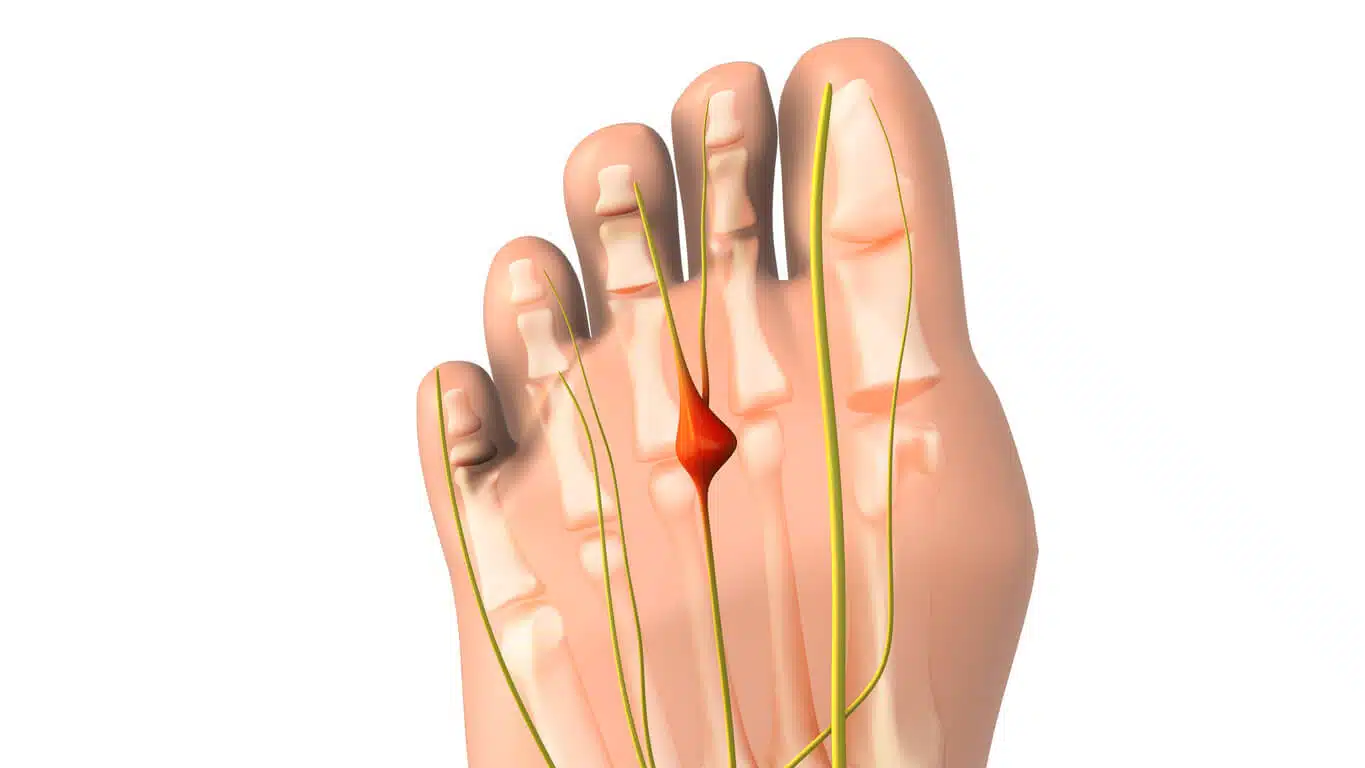
In short, Morton’s neuroma treatment ranges from conservative approaches like custom orthotics and corticosteroid injections to surgical intervention when non-invasive methods fail to provide relief.
- Conservative treatments work first – Orthotics, injections, and activity modifications successfully relieve symptoms in many patients without surgery.
- Surgery becomes necessary – When conservative care fails after six months, surgical removal of the nerve provides lasting relief.
- Recovery varies significantly – Conservative treatments require weeks to months, while surgical recovery typically takes six to eight weeks.
Morton’s neuroma treatment begins with understanding this painful condition that affects the ball of your foot, typically between the third and fourth toes. The condition occurs when tissue around one of the nerves leading to your toes thickens, causing sharp, burning pain or numbness. Many patients describe the sensation as standing on a pebble or feeling a fold in their sock.
Selecting the right treatment depends on several factors, including symptom severity, how long symptoms have persisted, and how the condition affects your daily activities. While some patients find relief through conservative measures, others require surgical intervention to eliminate pain and restore normal function.
What Is Morton’s Neuroma?
Morton’s neuroma develops when the tissue surrounding a nerve in the ball of the foot becomes irritated and thickened. Despite its name, Morton’s neuroma is not actually a tumor but rather a benign enlargement of nerve tissue.
The condition most commonly affects the nerve between the third and fourth toes, though it can occur between other toes, as well. Several factors contribute to its development:
- Wearing high-heeled or tight shoes that compress the toes
- Participating in high-impact athletic activities
- Having foot deformities like bunions, hammertoes, or flat feet
- Experiencing foot injuries or trauma
Conservative Morton’s Neuroma Treatment Options
Conservative Morton’s neuroma treatment represents the first line of defense against this painful condition. Most podiatrists recommend trying non-surgical approaches for at least six months before considering surgery.
Footwear Modifications
Changing your shoes provides immediate relief for many patients. Your podiatrist will recommend:
- Shoes with a wide toe box to reduce pressure on the nerve
- Low-heeled footwear (less than two inches)
- Shoes with adequate arch support
- Avoiding tight, pointed-toe shoes
Custom Orthotics and Padding
Custom orthotic devices redistribute pressure away from the affected nerve. These medical-grade inserts:
- Provide arch support to reduce nerve compression
- Include metatarsal pads that lift and separate the bones
- Correct biomechanical abnormalities contributing to the condition
- Offer cushioning to absorb shock during walking
Corticosteroid Injections
When footwear changes and orthotics do not provide sufficient relief, corticosteroid injections reduce inflammation around the nerve. Research indicates that corticosteroid injections provide significant pain relief for periods ranging from several weeks to several months.
Your podiatrist may recommend multiple injections spaced several weeks apart. However, repeated corticosteroid injections carry risks, including:
- Weakening of the surrounding ligaments
- Fat pad atrophy
- Skin discoloration
- Potential tendon rupture with excessive use
Alcohol Sclerosing Injections
Alcohol sclerosing injections offer an alternative to corticosteroids. These injections use dehydrated alcohol to destroy nerve tissue and reduce pain signals.
The procedure typically requires four to seven injections administered over several weeks. While alcohol sclerosing injections show promising results, they remain less commonly used than corticosteroid injections.
Physical Therapy
Physical therapy addresses biomechanical factors contributing to Morton’s neuroma. Your physical therapist may incorporate:
- Stretching exercises for the calf muscles and Achilles tendon
- Strengthening exercises for the foot muscles
- Manual therapy techniques to improve joint mobility
- Gait training to correct walking patterns
Activity Modification
Reducing or modifying activities that aggravate symptoms allows the nerve to heal. This includes:
- Avoiding high-impact activities like running or jumping
- Taking frequent breaks when standing for long periods
- Choosing low-impact exercises such as swimming or cycling
- Gradually returning to activities as symptoms improve
When Conservative Treatment Fails
Despite comprehensive conservative Morton’s neuroma treatment, some patients continue experiencing persistent pain that interferes with daily activities. Surgery becomes the appropriate option when:
- Symptoms persist after six months of conservative treatment
- Pain significantly limits work, exercise, or daily activities
- Multiple conservative approaches have failed
- The patient understands surgical risks and recovery requirements
Surgical Treatment for Morton’s Neuroma
Surgical intervention for Morton’s neuroma involves removing the affected nerve, a procedure called neurectomy. While this eliminates pain, it also results in permanent numbness in the affected toes.
The Surgical Procedure
Morton’s neuroma surgery typically occurs as an outpatient procedure under local anesthesia with sedation. The surgeon makes a small incision on either the top or bottom of the foot and carefully removes the enlarged nerve tissue.
The procedure generally takes 30-45 minutes. Most patients walk immediately after surgery with the help of a surgical shoe or boot.
Recovery Timeline
Recovery from Morton’s neuroma treatment surgery progresses through several stages:
Week 1-2:
- Keep the foot elevated as much as possible.
- Apply ice to reduce swelling.
- Take prescribed pain medications as needed.
- Avoid bearing full weight on the foot.
Week 3-4:
- Gradually increase walking distance.
- Begin wearing supportive athletic shoes.
- Start gentle range-of-motion exercises.
- Continue protecting the surgical site.
Week 5-8:
- Resume normal daily activities.
- Return to low-impact exercise.
- Gradually increase activity levels.
- Monitor for any complications.
Most patients return to regular activities within six to eight weeks, though complete healing takes several months.
Surgical Success Rates
Research demonstrates favorable outcomes for Morton’s neuroma surgery. However, surgery carries potential complications, such as:
- Persistent pain or recurrence (10-15% of cases)
- Infection at the surgical site
- Prolonged swelling or stiffness
- Formation of stump neuroma (painful nerve regrowth)
- Permanent numbness between the affected toes
Comparing Conservative and Surgical Approaches
Deciding between conservative and surgical Morton’s neuroma treatment requires careful consideration of multiple factors.
Advantages of conservative treatments include:
- No surgical risks or complications
- Maintains normal sensation in the toes
- Less expensive than surgery
- No recovery downtime
- Can be adjusted based on symptom response
Disadvantages of conservative treatments include:
- May require ongoing management
- Success rates vary widely
- Requires commitment to footwear changes
- May take several months to see improvement
- Symptoms can return if triggers are not addressed
Advantages of surgical treatment include:
- Definitive solution with high success rates
- Eliminates the pain source permanently
- Allows return to normal activities
- No need for ongoing conservative measures
- Single treatment approach
Disadvantages of surgical treatment include:
- Possible permanent numbness in the affected toes
- Surgical and anesthesia risks
- Recovery period of six to eight weeks
- More expensive than conservative options
- Potential for complications or recurrence
How to Choose the Right Treatment Path
Selecting between conservative and surgical Morton’s neuroma treatment involves a partnership between you and your podiatrist. Consider these questions:
- How long have you had symptoms? Conservative treatment works best when started early. Symptoms present for less than six months respond better to non-surgical approaches.
- How severe is your pain? Mild to moderate pain often responds well to conservative care, while severe, debilitating pain may warrant earlier surgical consideration.
- What are your activity goals? Athletes or individuals with physically demanding jobs may benefit from the definitive solution surgery provides.
- Have you consistently followed conservative treatment recommendations? Success with conservative care requires strict adherence to footwear modifications, orthotics use, and activity restrictions.
- What is your tolerance for permanent numbness? While surgical removal eliminates pain, it creates permanent numbness between the affected toes that some patients find bothersome.
Finding Expert Morton’s Neuroma Treatment in South Texas
The podiatrists at The Podiatry Group of South Texas bring decades of experience treating Morton’s neuroma and other foot conditions. Our team provides comprehensive evaluations to determine whether conservative or surgical Morton’s neuroma treatment best addresses your specific needs.
We offer advanced conservative treatments, including custom orthotics, corticosteroid injections, and alcohol sclerosing therapy. When surgery becomes necessary, our experienced surgeons utilize the latest techniques to minimize complications and optimize outcomes.
With convenient locations throughout South Texas, relief from Morton’s neuroma pain is within reach. Our podiatrists work closely with each patient to develop personalized treatment plans that restore comfort and function.
Do not let Morton’s neuroma limit your activities or diminish your quality of life. Schedule an appointment with The Podiatry Group of South Texas today by calling (210) 227-8700, option #2 or using our appointment form.
